
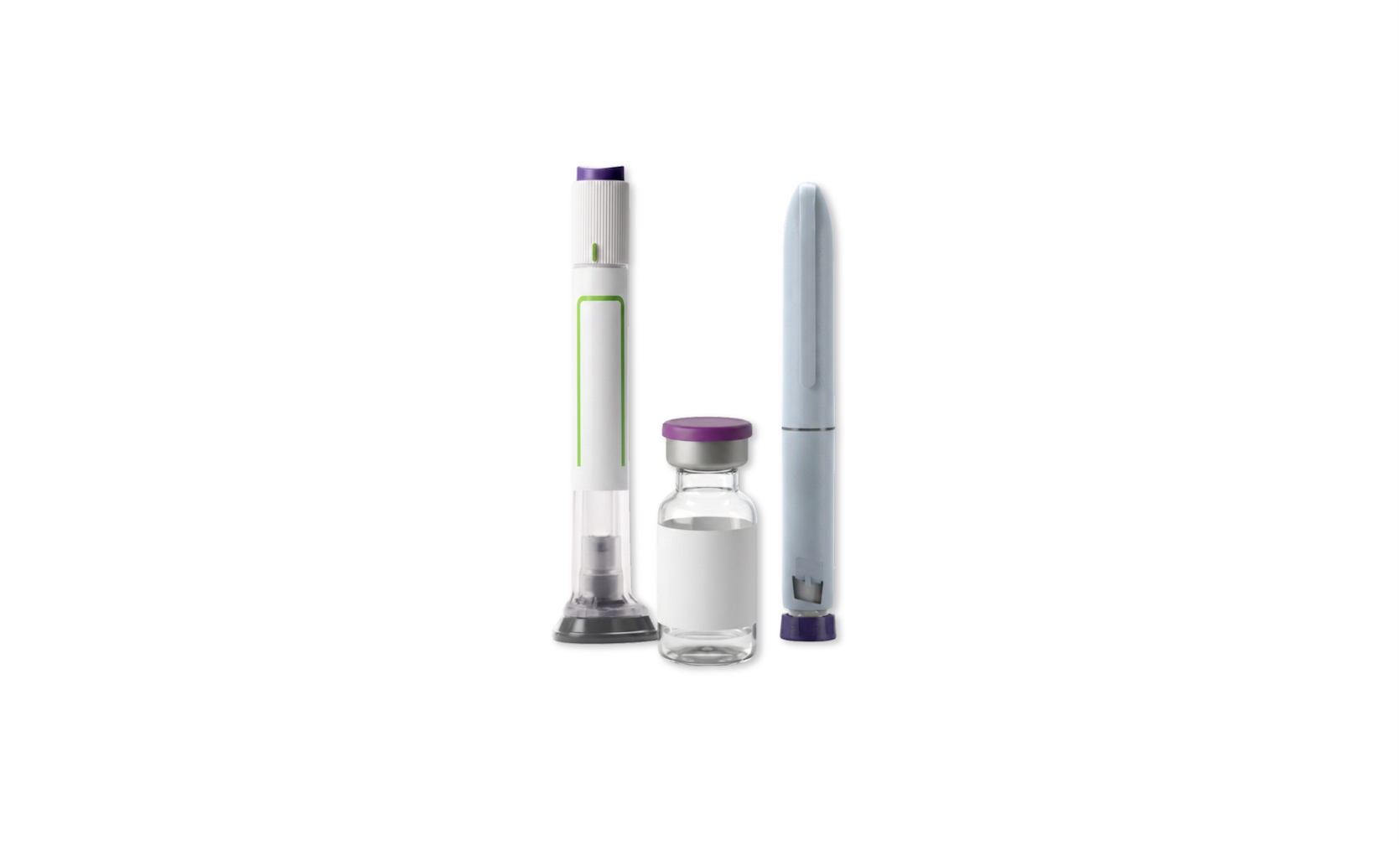
Zepbound® (tirzepatide) is available in different delivery formats, including the KwikPen® and single-dose vial. While both are designed to deliver tirzepatide, the experience of using each option is different.
Understanding the differences can help patients feel more comfortable with their treatment and choose the format that best fits their needs.
What Is Zepbound® ?
Zepbound® contains tirzepatide, a medication used along with a reduced-calorie diet and increased physical activity for chronic weight management in appropriate patients. Tirzepatide works by activating GIP and GLP-1 receptors, which can help regulate appetite, food intake, and metabolic processes.
The medication is available in several prescribed doses, and the appropriate dose is determined by a healthcare provider based on the patient's treatment plan, response, and tolerability.
Zepbound® KwikPen®
The KwikPen® is a prefilled injection device designed to make administration more convenient.
Instead of drawing medication from a vial with a separate syringe, the patient uses the pen device according to the manufacturer's instructions.
Potential Advantages of the KwikPen®
- Convenience: The medication is contained within the pen device.
- Portability: The pen can be easier to transport and store as directed.
- Simplified administration: There is no need to draw medication from a vial into a syringe.
- Consistent dosing: The pen is designed to deliver the prescribed dose when used correctly.
- Less equipment: Patients generally do not need to separately handle a vial and syringe.
For patients who prioritize convenience or who are less comfortable preparing injections, a pen device may be appealing.
Zepbound® Vial
With the vial presentation, medication is supplied in a vial and administered using a syringe and needle.
This format involves an additional preparation step because the patient must properly draw the prescribed amount of medication into the syringe before injecting.
Potential Advantages of a Vial
- Familiar injection method: Some patients are already comfortable using syringes.
- Potential cost differences: Depending on the prescription, pharmacy, insurance coverage, and dispensing arrangement, the vial format may have different out-of-pocket costs.
- Straightforward storage: The medication is stored in its supplied vial according to the manufacturer's instructions.
Patients using a vial should receive appropriate instructions on syringe selection, measurement, injection technique, and safe disposal of needles.
Is the Medication Different?
The important distinction is really about the delivery device.
When comparing FDA-approved Zepbound® products, the active ingredient is tirzepatide. The KwikPen® and vial are different ways of delivering the medication.
However, patients should not assume that dosing instructions are interchangeable between different products, concentrations, or formulations.
One Important Point About "Units"
A common source of confusion is syringe "units."
Units on an insulin syringe are a volume measurement, not a measurement of milligrams of tirzepatide.
For example, the number of syringe units required depends on the concentration of the medication being administered. Therefore, a specific number of units from one vial concentration cannot automatically be used as the equivalent dose from another concentration or from a pen.
Patients should always follow the exact dosing instructions provided with their prescription.
Which One Is Better?
There isn't necessarily a universally "better" option.
The best choice depends on factors such as:
- Your prescribed dose
- Your comfort with injections
- Cost and insurance coverage
- Availability
- Preference for a pen versus syringe
- Your healthcare provider's recommendations
For someone who wants the simplest administration experience, a prefilled pen may be preferable. Someone who is comfortable using a syringe may prefer the vial format, particularly if the overall cost or availability is more favorable.
What About Compounded Tirzepatide?
This is an important distinction.
Zepbound® and compounded tirzepatide are not the same. Compounded medications may be prepared at different concentrations and may come with different dosing instructions, supplies, and administration requirements.
Patients should never transfer dosing instructions from a compounded tirzepatide vial to a Zepbound® pen/vial, or vice versa.
This is particularly important when calculating syringe measurements. A dose expressed in milligrams (mg) is not interchangeable with a volume expressed in milliliters (mL) or syringe units without knowing the medication's concentration.
The Bottom Line
Zepbound® KwikPen® and vial presentations can provide patients with different administration experiences. The KwikPen® emphasizes convenience and simplified administration, while the vial requires a syringe and additional preparation.
Regardless of the delivery format, patients should use the exact dose and administration instructions prescribed by their healthcare professional.
If you are switching between a pen, vial, or another tirzepatide formulation, do not attempt to calculate an equivalent syringe measurement on your own. Confirm the dose and concentration with your prescriber or dispensing pharmacy before making the change.
Your medication should fit your treatment plan, not the other way around.